
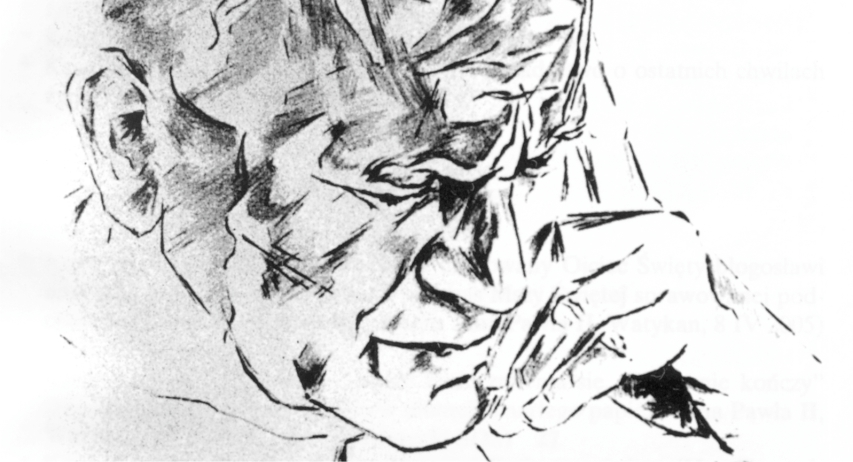

Subject and Seeing in “The End of the Tether” by Joseph Conrad
Katarzyna SOKOŁOWSKA
Maria Curie-Skłodowska University, Lublin , Polandhttps://orcid.org/0000-0001-7971-6113
Abstract
Joseph Conrad’s novella “The End of the Tether,” written in his mature phase, concludes the trilogy featuring such iconic texts as “Youth” and “Heart of Darkness.” The central theme of the story is the tragedy of Captain Whalley, an outstanding sailor who trusts that nothing would shatter his life. However, when he faces bankruptcy he has to swallow his pride and secures a job as the captain of a steamer. Soon, affected by eyesight deterioration and eventually blindness, Whalley compromises his integrity and conceals his vision loss, thus putting the ship in danger. Whalley’s attitude is representative of the modern subject, the cogito, who recognizes himself as a source of perceptual and cognitive certainty, and seeks to confirm the position of power and control both over himself and over external reality. Levin relates this model of subjectivity to the style of seeing that confronts the perceiving “I” with the object in front of it and turns Being into representation. Discarding the ocularcentric tradition with its affirmation of sight as an instrument of reaching the truth, Levin maintains that sight isolates an object in the flux of sensations, immobilizes it in order to make it open to scrutiny and, thus, expresses the will to power that correlates with the desire for certainty. The motif of Whalley’s declining eyesight undermines his status of the subject, the Cartesian cogito, who establishes himself as the centre and, eager to assert his will, aspires to creating coherent representations. The images of darkness, glaring light and a multitude of tangled or disintegrating shapes subvert representation and foreshadowing the protagonist’s blindness, invoke questions on the relationship between the perceiving subject and reality which are typical of Conrad’s fiction and modernist literature.
Keywords:
Joseph Conrad, sight, blindness, the subject, representationReferences
Batchelor, John. The Life of Joseph Conrad: A Critical Biography. Oxford and Cambridge: Blackwell, 1996.
Billy, Ted. A Wilderness of Words: Closure and Disclosure in Conrad’s Short Stories. Lubbock: Texas Tech University Press, 1997.
Bonney, William W. Thorns and Arabesques: Contexts for Conrad’s Fiction. Baltimore and London: Johns Hopkins University Press, 1980.
Conrad, Joseph. “Jądro ciemności.” In Conrad, Dzieła. Vol. 6. Młodość i inne opowiadania. Edited by Zdzisław Najder. Translated by Aniela Zagórska. Warszawa: PIW, 1972.
Conrad, Joseph. Joseph Conrad to Frank Nelson Doubleday, February 7, 1924. In The Collected Letters of Joseph Conrad. Vol 8. 1923–1924. Edited by Laurence Davies and Gene M. Moore. Cambridge: Cambridge University Press, 2008.
Conrad, Joseph. “Lord Jim.” In Conrad, Dzieła. Vol. 5. Edited by Zdzisław Najder. Translated by Aniela Zagórska. Warszawa: PIW, 1972.
Conrad, Joseph. “Młodość.” In Conrad, Dzieła. Vol. 6. Młodość i inne opowiadania. Edited by Zdzisław Najder. Translated by Aniela Zagórska. Warszawa: PIW, 1972.
Conrad, Joseph. “Murzyn z załogi ‘Narcyza’: Opowieść morska.” In Conrad, Dzieła. Vol. 3. Edited by Zdzisław Najder. Translated by Bronisław Zieliński. Warszawa: PIW, 1972.
Conrad, Joseph. “Nostromo: Opowieść z wybrzeża.” In Conrad, Dzieła. Vol. 8. Edited by Zdzisław Najder. Translated by Jadwiga Korniłowiczowa. Warszawa: PIW, 1972.
Conrad, Joseph. “Smuga cienia: Wyznanie.” In Conrad, Dzieła. Vol. 18. Edited by Zdzisław Najder. Translated by Jan Józef Szczepański. Warszawa: PIW, 1973.
Conrad, Joseph. “Tajfun.” Translated by Halina Carroll-Najder. In Conrad, Dzieła. Vol. 7. Tajfun i inne opowiadania. Edited by Zdzisław Najder. Translated by Halina Carroll-Najder and Aniela Zagórska. Warszawa: PIW, 1972.
Conrad, Joseph. “Tajny agent: Opowieść prosta.” In Conrad, Dzieła. Vol. 10. Edited by Zdzisław Najder. Translated by Agnieszka Glinczanka. Warszawa: PIW, 1973.
Conrad, Joseph. “The End of the Tether.” In Conrad, Youth, Heart of Darkness, The End of the Tether. London: Dent, 1946.
Conrad, Joseph. “U kresu sił.” In Conrad, Dzieła. Vol. 6. Młodość i inne opowiadania. Edited by Zdzisław Najder. Translated by Aniela Zagórska. Warszawa: PIW, 1972.
Descartes, René. Dioptryka. Translated by Piotr Błaszczyk and Kazimierz Mrówka. Kraków: Universitas, 2018.
Descartes, René. Medytacje o pierwszej filozofii. Translated by Maria Ajdukiewicz and Kazimierz Ajdukiewicz. Warszawa: PWN, 1958.
Descartes, René. Rozprawa o metodzie właściwego kierowania rozumem i poszukiwania prawdy w naukach. Translated by Tadeusz Żeleński (Boy). Kraków: Wydawnictwo Zielona Sowa, 2004.
Descartes, René. Zasady filozofii. Translated by Izydora Dąmbska. Kęty: Wydawnictwo Antyk, 2001.
Graver, Lawrence. Conrad’s Short Fiction. Berkeley and Los Angeles: University of California Press, 1969.
Gurko, Leo. Joseph Conrad: Giant in Exile. New York: Macmillan, 1962.
Heidegger, Martin. “Czas światoobrazu.” Translated by Krzysztof Wolicki. In Heidegger, Budować, mieszkać, myśleć: Eseje wybrane. Edited by Krzysztof Michalski. Translated by Krzysztof Michalski et al. Warszawa: Czytelnik, 1977.
Karl, Frederick R. Joseph Conrad: The Three Lives. London: Faber and Faber, 1979.
Land, Stephen K. Conrad and the Paradox of Plot. London: Macmillan, 1984. Levin, David Michael. The Opening of Vision: Nihilism and the Postmodern Situation. New York and London: Routledge, 1988.
Maisonnat, Claude. Joseph Conrad and the Voicing of Textuality. Lublin and New York: Maria Curie-Skłodowska University Press and Columbia University Press, 2017.
Peters, John G. Conrad and Impressionism. Cambridge: Cambridge University Press, 2004.
Pick, Daniel. “Stories of the Eye.” In Rewriting the Self: Histories from the Renaissance to the Present. Edited by Roy Porter. London and New York: Routledge, 1997.
Pinsker, Sanford. ‘“The End of the Tether’: Conrad’s Death of a Sailsman.” Conra-diana 3, no. 2 (1971–1972): 74–76.
Platon. Państwo. Translated by Władysław Witwicki. Warszawa: Wydawnictwo Akme, 1991.
Purssell, Andrew M. ‘“The End of the Tether’: Conrad, Geography, and the Place of Vision.” The Conradian 33, no. 2 (Autumn 2008): 30–43.
Schwarz, Daniel R. Conrad: The Later Fiction. London and Basingstoke: Macmillan, 1982.
Tarnas, Richard. The Passion of the Western Mind: Understanding the Ideas That Have Shaped Our World View. London: Pimlico, 2010.
Watt, Ian. Conrad w wieku dziewiętnastym. Translated by Maria Boduszyńska-Borowikowa. Gdańsk: Wydawnictwo Morskie, 1984.
Young, Gloria L. “Chance and The Absurd in Conrad’s ‘The End of the Tether’ and ‘Freya of the Seven Isles.’” Conradiana 7, no. 3 (1976): 253–61.
Maria Curie-Skłodowska University, Lublin https://orcid.org/0000-0001-7971-6113